
Relevance of technology in education
Before the pandemic hit, education was considered to be one of the most fertile areas for technology-based innovation. Many people believe that technology can do anything the human imagination can imagine.
Our education system is heavily dependent on technology to ensure its future. Students who wish to study should never be denied this opportunity due only to financial or locational barriers. The Indian Education System is a very valuable one. It is the stage at which students learn the most. Their higher education is a significant part of the students’ education. Millions of people deserve to receive a quality education, but they are unable to because of financial constraints or lack access to it.
This results in an unequal distribution of this precious resource. The technology has, however, managed to compensate for this loss in a limited way. It allows students and teachers to interact in a structure that is innovatively designed. It has changed our learning methods by using various media, from online classes to offline classrooms, and to the format of an online classroom.
The presence of technology can be used to impart our academic curriculum, everyday interactions, activities, and value education. The technology has also personalised learning methods and media. From the comfort of home, we can choose from an array of online courses. These courses are offered by some of the most reputable institutions in the world.
How Technology and Education Interact
Here are some of the most significant ways that technology has impacted education, allowing us to have access to a multitude of opportunities.
1. From Offline to Online Classrooms
The technological innovation has enabled us to move offline classrooms online, regardless of geographic boundaries. COVID is a great example of how seamless communication and interaction can be achieved through platforms like G-Meet and Microsoft Teams. Communication is much more convenient, and decision-making is quicker.
2. Technology enhances connectivity
Our world is no longer monopolar. We live in a multipolar society where each country has a share of power. This makes us all interdependent. It is possible to connect and interact with students living overseas and gain knowledge of their education system.
It is essential to mix these values to better understand the differences between international education patterns and the qualities that one should try to inculcate. It is possible to do this through virtual interactions or meet-ups, where teachers and students can exchange ideas.
You can also collaborate with other people to share ideas, resources, and opinions for a different learning experience. The importance of technology to modern higher education can be seen.
3. Personalisation of education
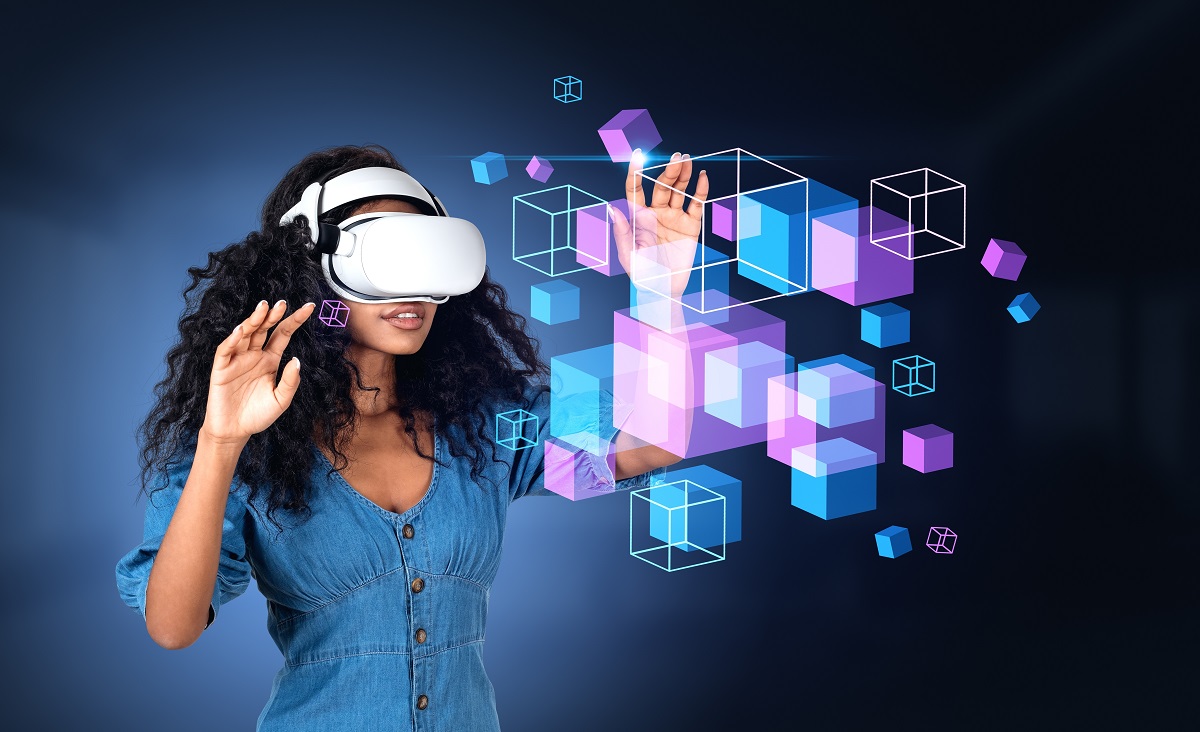
The metaverse, an innovative innovation in education that was introduced by technology, has revolutionized the system. It can offer a customised learning experience that is specially curated for our learning pace and preferred methods.
Educational content can also be enhanced by interactive elements, such as 3D models, gamified experiences, and interactive scenarios, to make learning more immersive and engaging. The ease of use of the interface enhances our ability to learn and understand new concepts.
4. Skill development
In order to provide vocational training, the interaction between technology and education ensures that people can interact in simulated settings where specially-created real-world job situations are created. It includes medical procedures that are complex for future medical professionals and practical experiments for aspiring engineers.
Students in high school can also benefit from this experience, as they can learn difficult subjects such as physics and Chemistry through 3-D models. This amalgamation was created to make learning fun. The future of higher education is shaped by many innovations and trends.
5. Accessibility
Teachers can provide instant feedback to students through online tests and interactive exercises. Learning analytics, which track student progress, can provide data-driven insights that will improve teaching methods and results for students. This results in a seamless exchange between students and teachers, as well as a rapid-paced learning environment where exploration is unrestricted.
Technology and Education – Can it cause concern?
Education and technology are the two most important pillars for growth in our economy. When both industries combine, the results are incredible. It is only natural that people are concerned about what they might bring. Overdependence on technology ruins education’s purpose and essence. Artificial intelligence is being used to introduce shortcuts, and there is an over-reliance on them.
Some students may take their academic knowledge for granted, thinking there will always be a backup. Other serious consequences include the misuse of technology for personal gain. These cases are often the result of our excessive use of technology.
Technology can offer many benefits, but it will never replace teaching in its true essence. Education is a combination of technology and human interaction. The interaction between students and teachers is organic and has a greater impact than technological intervention.
The institutions themselves will determine how much they want to expose their students to technology. Both the pros and the cons should be considered. They should be aware of how far their students can be exposed to the innovations and the potential consequences.
Students must be aware of how dependent they are on technology. It is important to understand how they use technology and whether it is ethically correct. They must make informed decisions. It is important that they understand that while technology can be helpful, it will not make them successful.
Conclusion:
This digital revolution has made it possible for us to simplify our education and other miscellaneous needs. It is a great thing, as we can be assured that in the future, no deserving students will miss out on an opportunity because of unfortunate circumstances.
FAQs
Q.1 How useful is technology for higher education?
It depends on how you use technology to your advantage. It is useful as long as it helps you to communicate and learn better. However, overusing it can be detrimental.
Q.2 What is the future of education in our country?
We can see the dependence of people on technology increasing. It is necessary to constantly develop newer software and applications that make it easier for students to understand concepts. Once this is understood, students can move forward with minimal difficulty. The dependence grows and may remain constant because we are always looking for quick solutions to every problem.
Q.3 Can students safely use the technology?
How technology is given to students will determine its safety. Teachers and parents can keep an eye on students’ use of technology.
Q.4 What is the impact of technology on the education industry, and what are its top five benefits?
The top five benefits that technology brings to the education sector
- Learn More About Enhanced Learning Experience
- Accessibility and flexibility are improved
- Students’ Engagement and Collaboration Improved
- Efficient Administrative Processes
- Data-driven Insights & Personalised Learning
Q.5 Does technology help in education?
The use of technology in the classroom has been shown to increase students’ motivation, learning, and understanding.