
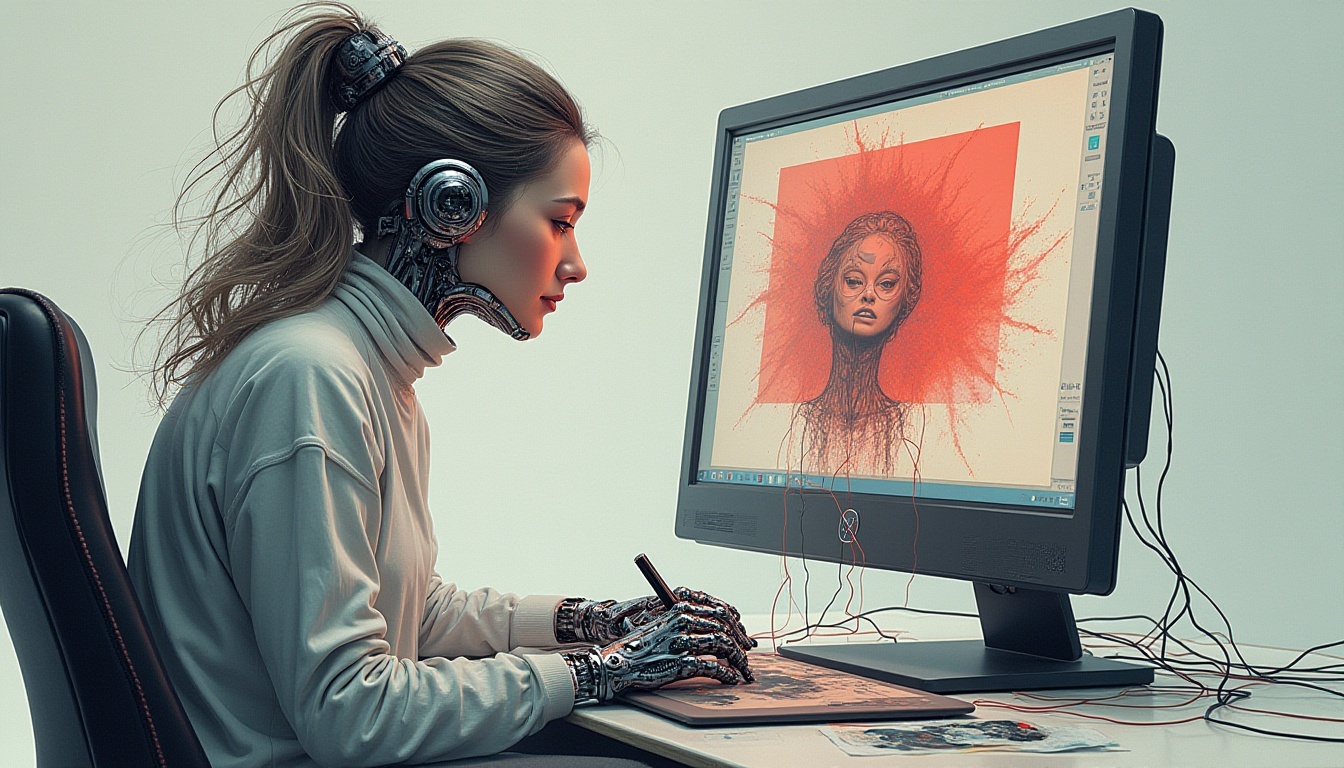
When considering the role of AI in graphic design, it’s important to be aware of both the pros and cons. This enables you to use AI responsibly, and to your advantage, while understanding its limitations.
The pros of AI in graphic design
When used strategically, AI can be an incredibly powerful tool, helping to boost creativity, save time, and increase efficiency. Here are the main advantages of AI in graphic design:
- Saves time and boosts efficiency: AI-powered tools can automate repetitive and time-consuming tasks such as resizing images, creating layouts and templates, or generating design variations. This can speed up your workflow and streamline certain processes.
- It can spark creativity and fresh ideas: Most designers will experience a creative block at some point, and AI can be a great help for kick-starting the ideation process. AI can suggest design elements, color palettes, or layout options that you might not have previously considered—giving you an initial concept to work from.
- Enables more precise personalization: AI can be used to analyze user data and generate designs tailored to specific audiences. This offers a great advantage when it comes to connecting with customers and driving engagement.
- It can make graphic design more accessible: While there’s no danger of AI replacing skilled graphic designers (more on that later!), AI-powered tools such as logo makers and color palette generators enable non-designers to create professional-looking design assets without advanced skills. This is useful for small businesses and solo entrepreneurs who might not have the budget to hire a professional designer.
- AI can free up designers’ time and energy to focus on more creative, fulfilling work: By automating smaller, repetitive tasks, AI can create more space for designers to concentrate on high-impact tasks that require more creativity—such as developing branding concepts or experimenting with innovative design ideas.
The cons of AI in graphic design
If you’re incorporating AI into your graphic design workflow, you must be aware of its limitations and potential drawbacks, especially ethical concerns.
Here are some key considerations to bear in mind when using AI:
- AI creates a gray area around copyright and plagiarism: AI tools work by analyzing vast amounts of existing content to generate new designs. This can raise issues if the AI unintentionally replicates copyrighted content—and, by the same token, it can be difficult for graphic designers to prove the originality of their work if they’re using generative AI. This is still very much a gray area, so designers must proceed with caution.
- AI can perpetuate harmful stereotypes and biases: AI systems are trained on datasets that may be inherently biased, which means that AI-generated content runs the risk of perpetuating harmful stereotypes and/or excluding or misrepresenting certain groups of people. Human judgment is absolutely essential here: you must make sure that any content you’re using and distributing is not causing harm.
- AI-generated content may lack originality: It’s important to bear in mind that AI works by drawing from existing data, content, and patterns. As such, AI-generated designs may lack originality and feel repetitive. Although AI can be a great creative partner, you must rely on your own ideas and creativity for truly unique designs.
- Over-reliance on AI tools might dull your creative skills: If you become too reliant on AI tools throughout the graphic design process, you may forget to flex your own creative muscles. It’s important not to lose sight of what makes you a great designer—and to make sure that you’re using AI as an aid rather than a substitute.
Now we’re familiar with the pros and cons of AI in graphic design, let’s look to the future. Is it likely that AI will replace graphic designers? Here’s what we think…
AI and the future of graphic design: will AI replace graphic designers?
Whether you’re already working as a graphic designer or aspiring to do so in the future, you’ve likely got some concerns about where the industry is headed.
We’ve shared some pretty impressive use cases for AI in graphic design and highlighted the advantages of leveraging AI tools within the graphic design workflow.
So where does this leave human designers? Will AI eventually replace graphic designers altogether?
In a word: no. AI can be a great time-saver, efficiency-booster, and creative sparring partner. It can automate certain tasks and eliminate some of the more repetitive aspects of the graphic design process.
What it cannot do is come up with truly original, unique designs—the kind that can only be borne by the human imagination. Nor can it practice empathy or build an emotional connection with a human audience. It’s also not great at understanding abstract concepts or exercising critical thinking.
AI is also not able to collaborate with clients, manage design projects, and work cross-functionally with multiple stakeholders across the business.
AI is a tool: a highly intelligent assistant that can support you in the creation of compelling designs and help you streamline your day-to-day processes and workflows. But, until it can match humans in terms of creativity and emotional intelligence (which seems highly unlikely), it will not replace graphic designers.
If you’re working in graphic design ( looking at how to become a graphic designer), you will need to get to grips with AI-powered tools and learn how to use AI ethically and responsibly within your design process. But, for now, you don’t need to worry about AI taking your job altogether.