
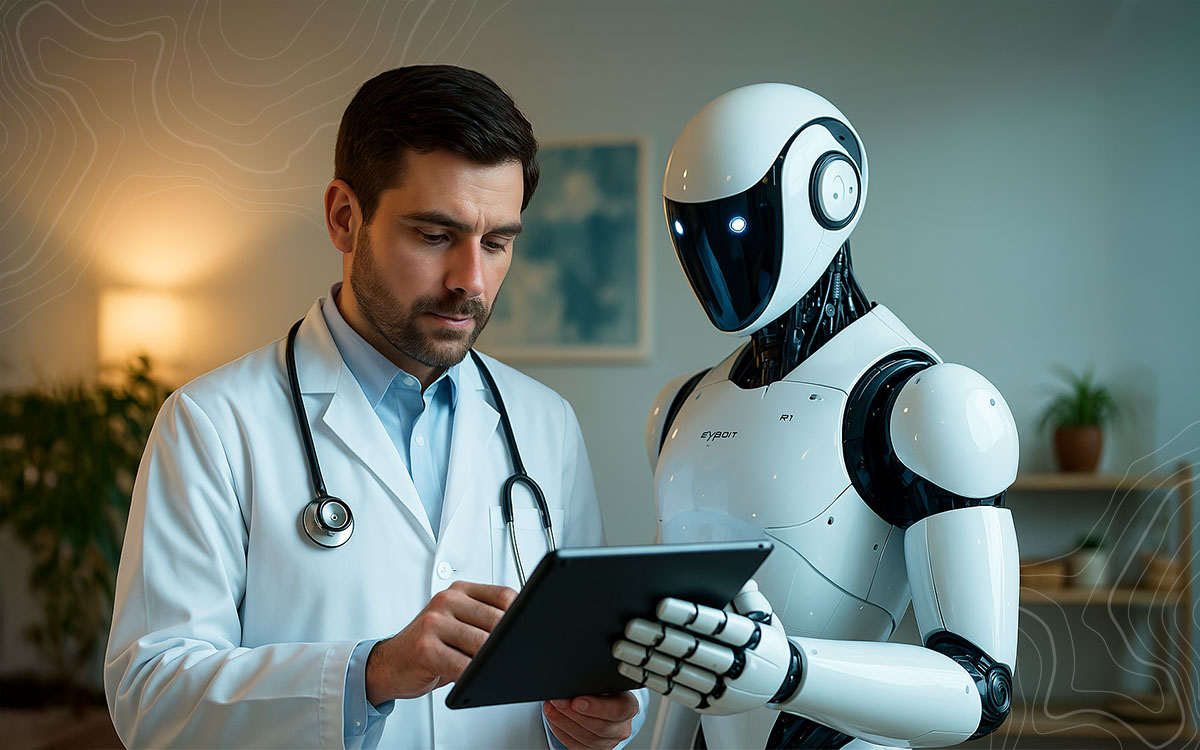
Generation and healthcare are converging hastily. Most of the maximum transformative developments are synthetic intelligence (AI), deep gaining knowledge of, generative AI, scientific and existence technological know-how, focused on large Language models/foundational models and the latest rise of Agentic AI.
Collectively, they’re converting the complete spectrum of healthcare and lifestyle technological know-how enterprise – from preventive care to mental fitness guide to drug discovery to imaging and diagnostics to robotics-powered surgical treatment.
Robotics in healthcare is revolutionizing surgical precision, permitting minimally invasive processes, and assisting in post-operative healing via robot exoskeletons and physical therapy aids. Robot systems are also being used in elder care, patient monitoring, and logistics within hospitals, enhancing efficiency and safety.
What once appeared futuristic, inclusive of AI-powered diagnostics and digital assistants, now shapes ordinary healthcare. While algorithms analyze data and detect patterns in the historical past, the actual capacity lies in combining system intelligence with human empathy and revel in.
AI in life sciences is changing how healthcare specialists stumble upon chance, engage with patients, and deliver proactive care. It is making healthcare more predictive, more available, and more tailored to individual wishes.
Key AI use instances throughout healthcare and life technological know-how
Drug discovery and improvement: The process of coming across new medicines is being transformed by way of advanced computational methods. Historically, long and expensive, drug improvement now benefits from analyzing considerable datasets of chemical substances, simulating interactions with the human body, and figuring out promising candidates tons faster.
AI is helping in boost up the system, reduce fees, and enhance the fulfillment charge of locating new pills and makes the medicine extra powerful. one of the maximum impactful programs of AI in existence sciences has been in protein structure prediction. as it should be figuring out the three-dimensional form of a protein primarily based on its amino acid collection has long been a chief task in biology.
Current advances in AI have made it feasible to expect those systems with superb accuracy, assisting researchers to better recognize biological mechanisms and boost areas consisting as drug discovery, genomics, and disease modelling.
Clinical Imaging and Diagnostics: Advanced AI algorithms improve the accuracy and velocity of decoding scientific images. They can locate diffused signs and symptoms of disorder in X-rays, MRIs and CT scans, regularly earlier than they are seen to the human eye.
In fields that include pathology and ophthalmology, AI helps perceive cancerous cells and display screens for diabetic retinopathy, supporting quicker and more unique scientific decisions. Researchers are exploring AI fashions that can analyze human sounds consisting of coughing, speech and respiratory to help discover early signs and symptoms of breathing conditions like tuberculosis.
These technologies can support advanced prognosis, specifically in nations in which the disease burden is excessive. Healthtech organizations are also growing AI-based equipment to evaluate lung health through the use of sound evaluation. Some are considering the combination of advanced models to similarly enhance their abilities.
In parallel, multimodal AI systems are being evolved to interpret a wide variety of scientific records, together with chest X-rays, mammograms, dermatology pictures, retinal scans, radiology, pathology slides, health records and genomic records. Those tools are designed to help clinicians make faster and more knowledgeable selections, in the end improving patient care.
Customized Medication: Every patient is specific, and AI is assisting healthcare in moving beyond one-size-fits-all remedies. By way of analyzing genetic statistics, lifestyle elements and medical histories, AI can personalize treatment options to better meet individual needs.
Oncology systems such as Tempus and IBM Watson for Oncology and Genomics examine tumour genetics to suggest targeted remedies, enhancing outcomes and decreasing side effects. Apollo Hospitals has adopted Watson for Oncology and Watson for Genomics to assist physicians provide patients with personalized, proof-primarily based most ccancercare.
Early Disorder Prediction (predicting hazards through acts): Healthcare professionals use AI to analyze statistics from electronic health records, wearables and behavioural patterns to perceive early warning signs that would in any other case move left. This supports advanced intervention for situations together with diabetes and mental health problems, assisting in enhancing preventive care.
Helping Sufferers with Virtual Assistants and AI Agents: AI dealers, AI-driven virtual assistants and chatbots provide sufferers with answers to fitness questions, symptom checking, medicine reminders, and continual situation help. Especially useful outdoors sanatorium hours or in areas with a restricted healthcare workforce, this equipment preserves patient engagement while ensuring patient privacy via strong safeguards.
Agentic AIcano transform the healthcare and life sciences industry. It could assist in fixing complex tasks through reasoning, making plans, dealing with workflows and taking movements. In destiny applications, agentic systems should function with a degree of autonomy to support diverse aspects of healthcare shipping.
Examples can include sellers for medical checking out, diagnostics, appointment scheduling, billing, coverage processing and pharmacy support. With the upward thrust of transformer architectures, big language models and generative AI, tools that include ChatGPT, Gemini, Claude and others have grown to be increasingly visible. In parallel, area-particular fashions like BioBERT and Med-PaLM had been advanced for healthcare and life sciences.
Those models are tailored from fashionable-causal architectures but educated on biomedical information to better apprehend clinical terminology and context. Such fashions are starting to aid use cases like virtual assistants and AI marketers that engage with clinicians and patients.
Robotic Surgical Treatment: Robotic surgery, also referred to as robot-assisted surgical treatment, allows doctors to perform many kinds of complex procedures with more precision, flexibility and manipulation than is possible with traditional techniques. Robot surgical structures powered with the aid of AI achieve precision, manipulation, and consistency in some point of operations. A robotic surgical procedure is regularly executed through tiny incisions.
However, from time to time, it is utilized in open surgeries: A Robotic surgical treatment machine includes a camera arm and mechanical hands with surgical instruments connected to them. The physician controls the arms whilst seated at a console, called the console, near the operating room.
The physician sees a magnified, high-definition, three-D view of the surgical website. The da Vinci Surgical device, as an example, enables minimally invasive processes with improved accuracy, decreasing restoration time and reducing risks, benefiting both sufferers and surgeons.
Far-off Tracking and Personalized Preventive Care: Wearable and implanted devices improved by AI are increasingly used to display vital signs and symptoms, which include coronary heart rate, oxygen saturation and blood sugar levels.
These technologies can alert healthcare experts to capability issues in real time, assisting in greater proactive and personalized care, particularly in remote or underserved regions. Humanoid robots are also starting to play a growing role in aged care across several international locations.
They provide help by way of offering companionship, supporting with everyday activities and contributing to cognitive and physical rehabilitation. Ready with technologies which include generative AI, computer imaginative and prescient, speech recognition, natural language processing and a network of sensors, these robots are being explored to be used in homes, clinics and hospitals.
One instance is a social humanoid robot developed to assist in healthcare environments. It’s been used in areas such as affected person engagement, rehabilitation and health training. Its features usually consist of facial recognition, emotion detection and conversational skills, making it a potentially treasured partner in elderly care settings.
Detecting Public Fitness Threats Early: AI can analyze virtual signals together with seek tendencies and social media habits to help identify outbreaks or rising health threats. For the duration of the current public health crisis, AI equipment has detected unusual nearby styles at an early level, permitting authorities to respond more swiftly.
These technologies have the potential to guide hazard prediction, contact tracing, disorder forecasting and designated outbreak detection. Such skills are in all likelihood to be vital in coping with future public health demanding situations. Positive AI systems are designed to display open-source facts, such as online reports in a couple of languages, to spot early signs and symptoms of outbreaks even before they are officially recognized.
Helping Doctors with AI Copilots: AI copilots are increasingly assisting healthcare professionals to reduce administrative workloads and improve medical decision-making. These gears can assist with responsibilities which include medical transcription, patient statistics entry, drafting medical notes, summarising patient histories, suggesting possible diagnoses, and helping with real-time decision-making. Whilst included with electronic clinical document (EMR) or digital health file (EHR) structures, they help streamline workflows and permit clinicians to awareness extra on patient care.
Some of the trendy AI copilots also feature voice-enabled abilities, presenting a palms-free experience that helps with clinical documentation and facilitates automating habitual administrative obligations. This permits doctors to spend more time engaging with sufferers and making knowledgeable care decisions.
Quicker Claims Processing and Coverage Workflow Automation: Automation through AI is speeding up claims processing, fraud detection and compensation workflows. AI-powered structures can boost claims resolution by means of automating routine tasks, enhancing accuracy and lowering the need for human intervention. This results in faster claims settlements, higher patron reports, and decreased operational charges for insurance companies.
While traditional employer automation equipment, consisting of robot process automation (RPA), was powerful for rule-based tasks and repetitive tasks, it frequently lacks autonomy and adaptability, making it hard to handle complicated workflows. More recent technologies, like agentic AI and clever automation, are being advanced to conquer these boundaries.
Those advanced systems are designed to cause, plan, utilize external tools and manipulate more dynamic tactics. Some insurers are beginning to adopt AI answers to improve administrative efficiency. Packages include eligibility verification, record processing and fraud detection, all aimed at increasing accuracy and lowering processing instances.
Overcoming Demanding Situations in AI Adoption
No matter its benefits, AI in healthcare provides actual challenges. In mental fitness, in particular, continuous alerts and statistics updates can overwhelm some individuals. Steady reminders of fitness dangers might also sell caution; however, they can also cause anxiety or misery.
AI can recognize speech or behavioural styles connected to melancholy; however, it couldn’t provide empathy or emotion-guided responses. Mental health care nonetheless is based closely on human presence and emotional intelligence, characteristics that construct consider and pressure restoration. To maximize AI’s impact at the same time as keeping agreement and protection, healthcare structures must cope with several key areas:
Facts, satisfaction, and interoperability: AI depends on clean, accurate, and unbiased facts. Health structures need to make sure seamless information exchange and compatibility throughout systems.
Educating Healthcare Professionals: Healthcare professionals need to feel assured about the usage of AI tools. Offering AI literacy in medical education will ensure tthattechnology beautifies instead of averts scientific exercise. Shielding the affected person’s privacy: sturdy protection of patient records is crucial. This includes encryption, clear consent protocols, and cozy entry to structures.
Responsible AI and AI Protection: AI in healthcare needs to be ethical, explainable and at ease. Models have to be trained on various datasets to avoid bias, with safeguards in place to shield sensitive health facts from misuse or cyber threats.
Keeping Healthcare Human: AI have to support, not replace, human care. The relationship between the patient and the provider remains vital to effective treatment. We need to give a boost to this courting, not weaken it.
Successful adoption of AI in manufacturing: AI equipment ought to be integrated into scientific workflows with proper validation, education and aid. Fulfillment relies upon regulatory readiness, consumer self-assurance and measurable upgrades to patient care.
A Human-Centred Method to Innovation
It’s now not a way while humans would live on laboratory-made blood, 3-D-printed organs. We would be wearing devices that augment our imaginative and prescient, speech and brain.
AI isn’t always designed to update docs, nurses, or caregivers; as an alternative, it helps them by extending their abilities. When carried out thoughtfully, AI enhances the effectiveness of preventive care, making healthcare structures more efficient, handy, and personalized.
As the technology continues to advance, its role in prevention will grow, facilitating earlier interventions and expanding access to care. Yet, at the same time, AI can improve decision-making and streamline offerings, the heart of healthcare remains human.
Healthcare is set greater than figuring out illness; it is about assisting lifestyles and well-being. AI can provide essential insights, but a most effective human connection can offer the empathy and acceptance that patients want. With the aid of integrating Robotics Healthcare with compassion and scientific judgment, we will build a healthcare machine that detects risks early and supplies care that really supports humans.